Structural Drying/Restoration
Let The Toasted Bud Heat Pest Control Heat help you dry any flooded structure and kill mold at the same time.
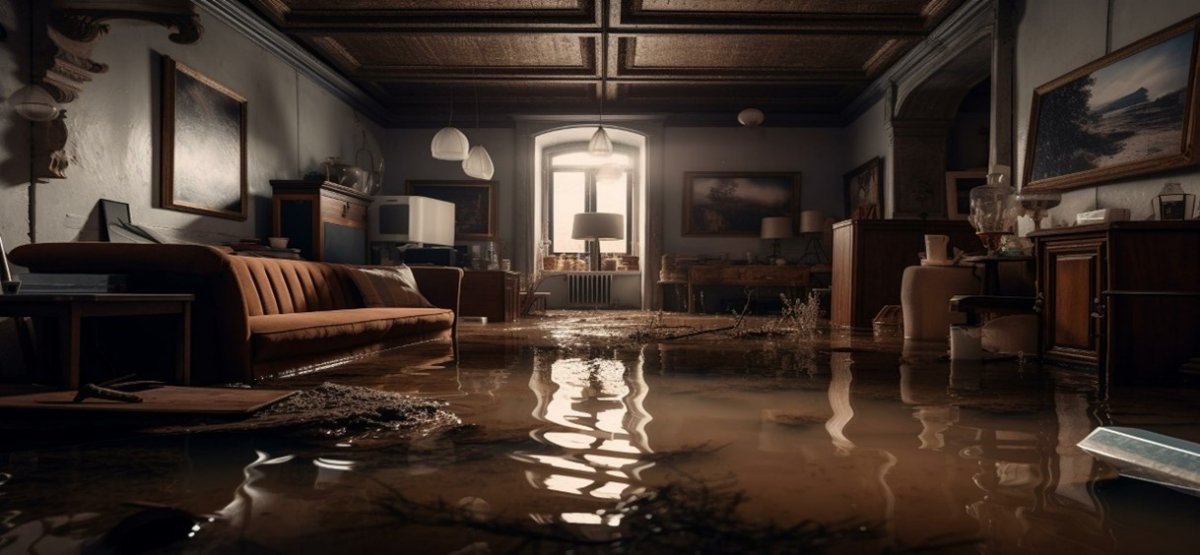
An overflowing toilet. A breach in the levee. Heavy rainfall. Hurricane storm surge. An unexpected freeze that bursts pipes. Why The Toasted Bud Heat Pest Control Heat for restoration?
As a restoration professional, you know the drill: water damage brings with it a multitude of microbes, bacteria, and mold. The faster the response in removing water and drying out the structure, the better the results. Immediate action with a layered response is crucial. You have the advanced equipment and techniques to remove the water quickly. Dehumidifiers are an important component of any restoration job.
Adding The Toasted Bud Heat Pest Control Heat can reduce the drying time and will kill microbes, bacteria, and mold... all in one step!
The longer someone waits, the more mold that grows and the more microbial damage that requires remediation. You gotta act fast... and sometimes electricity at the job site is a major concern. The Toasted Bud Heat Pest Control Heat has another tool for successful water restoration jobs. So how does heat work?
Structural pasteurization: the next step in drying
After the waters recede, a flooded house, apartment, church, or business becomes prime real estate for bacteria, mold, and other dangerous microorganisms. Traditional desiccant dehumidification is accomplished by processing the air in a structure two to three times per hour through the dehums. Determining how much airflow a given structure requires is paramount.
The IICRC S520 Standard and Reference Guide for Professional Mold Remediation defines structural pasteurization as an engineered process in which high temperatures are introduced into a structure or portion of a structure for the purpose of reducing bio-organisms to acceptable levels without damage to the structure.
Structural pasteurization and drying with The Toasted Bud Heat Pest Control Heat equipment may kill most organisms living in the interior spaces we inhabit— and the unseen spaces in wall voids, sub floors, and in structural materials. In the laboratory, Stachybotrys chartarum, also known as toxic mold, is killed in 30 minutes of 140°F (Domsch, 1993, pg. 745). E. coli rarely survive beyond 10 minutes of 150°F (Padhye and Doyle, 1992). Hantavirus is rendered inactive with exposures of 30 minutes of 140°F (Manual of Hemorrhagic Fever and Hantavirus Pulmonary Syndrome. WHO. p. 196).
The Toasted Bud Heat Pest Control Heat Solutions technology is the only EPA-registered heat technology in the nation, to the best of our knowledge. This lethal heat technology was the first to be registered with the EPA and approved by the IICRC for whole-structure treatments of wood-destroying organisms and structural pasteurization for mold and microbial contamination.
Dry the structure and kill microbes, bacteria, and insects
________________________________________________________________________________________________________________________________
A building’s electrical supply may not be available after a flood. Whereas electrical heating equipment requires a significant amount of energy, the fans for a portable direct fired heating system can be powered by a portable generator and propane is the heat source.
The treatment creates an open system where more than 4,000 cfm of heated air flows into and through the structure, and is vented out as part of the treatment. As the structure actively dries, air contaminated by mold spores, bacteria, and viruses is sanitized and continuously expelled from the treatment zone. Proper utilization of ducting and fans will distribute air throughout the structure, reduce stratification, and disrupt stagnant areas.
Our system can produce enough heated airflow to dry and sanitize a 20,000 cubic-foot structure.
When airflow is actively managed and the treatment area is aggressively ducted, our system can flush all the air in a 20,000 cubic-foot structure up to ten times per hour. Whereas traditional dehumidifiers recirculate the air within a structure, treating with our system forces heated, sanitized air throughout the structure. As the air exits the building, it takes humidity, impurities, and contaminants with it. Whatever remains in the structure is denatured by the 180°F treatment air.